
Quick Overview
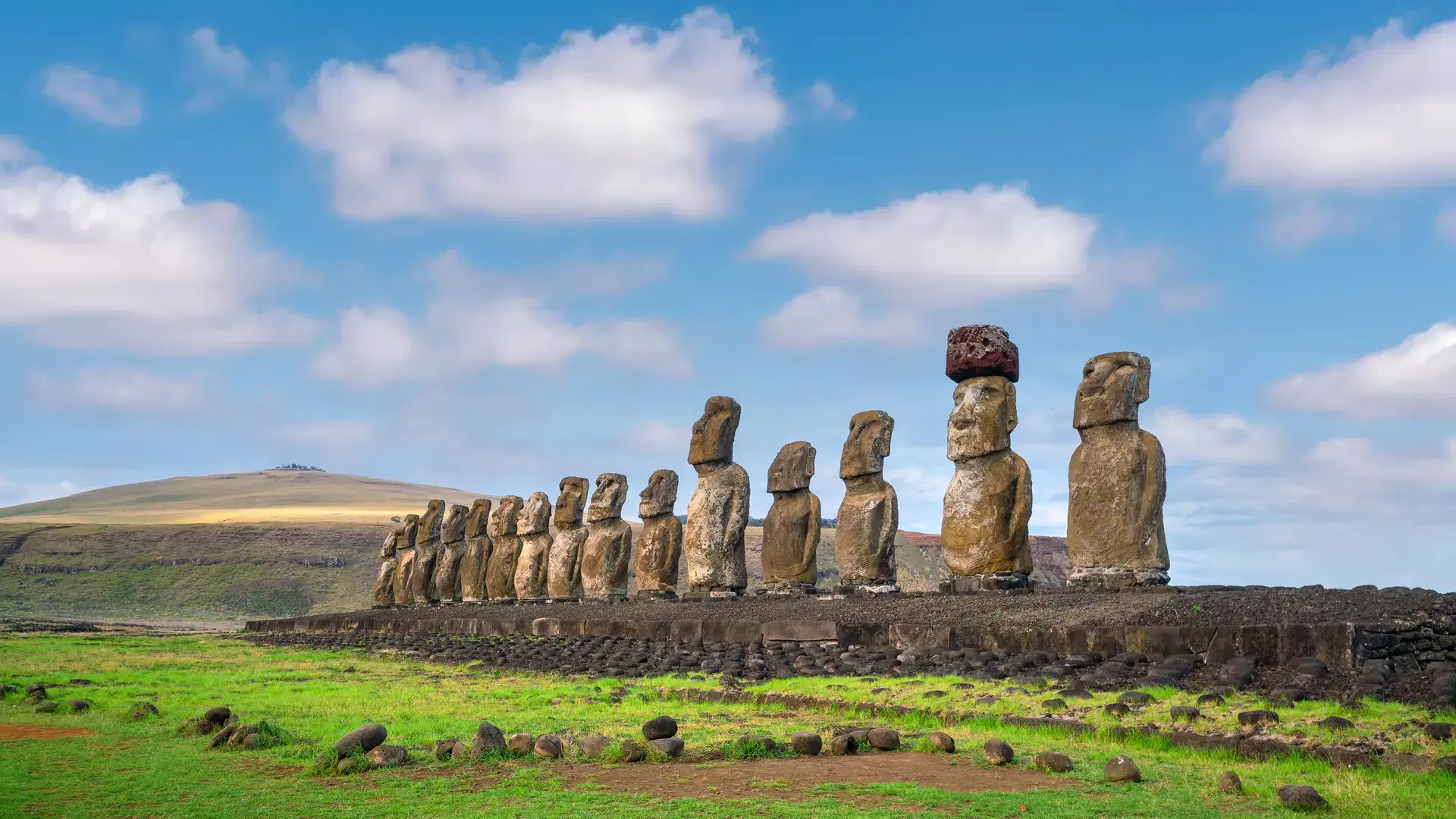
Easter Island, known locally as Rapa Nui, sits far out in the Pacific Ocean and feels unlike anywhere else on Earth. Volcanic landscapes, sweeping ocean views, and ancient stone statues define the island. Though small, it carries immense cultural and historical weight. Cruise visitors experience a place shaped by isolation, tradition, and a deep connection between people and land.
Why Visit
Easter Island draws travelers who are curious, thoughtful, and eager to experience something truly distinct. The famous moai statues are powerful in person, standing silently across the island in ways that feel spiritual rather than touristy. Beyond the icons, the island offers rugged scenery, caves, lava fields, and strong Polynesian traditions that are still alive today. Visiting here feels meaningful, as if you are stepping into a living story shaped by resilience and respect for nature.
Things To Do
Top Activity 1: Visit the Moai Sites Seeing the moai up close is the main reason most people come. Sites like Ahu Tongariki and Rano Raraku reveal how these statues were carved, transported, and positioned. Guided tours help explain the cultural significance and history, adding depth that transforms the experience from sightseeing into understanding.
Top Activity 2: Explore Volcanic Landscapes Easter Island is shaped by volcanoes, and exploring these areas shows a different side of the island. Craters, lava fields, and coastal cliffs offer dramatic views and quiet moments away from the main sites. The scenery feels raw and windswept, with the ocean never far from view.
Lesser Known Gem: Anakena Beach Anakena combines soft sand, clear water, and moai set against palm trees. It is one of the few sandy beaches on the island and feels almost unexpected after the rugged terrain elsewhere. Many visitors enjoy relaxing here after a morning of exploration.
Cruise Port Information
Easter Island does not have a traditional cruise port. Ships anchor offshore and tender passengers to the main town area. Sea conditions can affect tender operations, so schedules may be flexible. Once ashore, transportation is typically arranged through shore excursions or local guides, as distances between sites are greater than they appear. Facilities are limited, emphasizing planning and realistic expectations.
Practical Tips
Spring: 65 to 75 F Summer: 70 to 80 F Autumn: 65 to 75 F Winter: 60 to 70 F
Book excursions early, as independent exploration can be challenging on a short visit. Wear sun protection and sturdy shoes for uneven ground. Respect local rules around archaeological sites. Easter Island rewards visitors who move slowly, listen carefully, and appreciate the island's quiet sense of history.
Easter Island, Chile Sailings

26 Night World Cruise Cruise
STARTING AT
$4091.00
per person
40 Night World Cruise Cruise
STARTING AT
$6087.00
per person

129 NIGHT World CRUISE
STARTING AT
$28009.00
per person
35 NIGHT World CRUISE
STARTING AT
$7999.00
per person


121 NIGHT World CRUISE
STARTING AT
$29059.00
per person